|
| Register for our Free Newsletters |
|
 |
|
|
|
|
|
|
|
|
| Other Carouselweb publications |
|
|
|
|
|
|
|
|
|
|
| |
|
|
|
|
|
Intrunet Detectors provide versatile security for medium risk environments
|
|
Norbain
: 06 January, 2010 (New Product) |
|
|
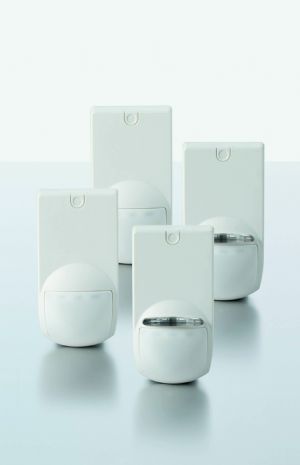
Norbain is stocking Siemens' Intrunet E-Line detector series for internal use with adjustable sensitivity and cost effectiveness for a range of environments |
|
|
|
Designed to deliver optimal versatility and cost/performance for low to medium risk applications, in quiet to harsh environments, Siemens Security Product's Intrunet E-Line internal detector range is now available through Norbain.
Complimenting their successful intruder product range, the Siemens E-line series includes single and dual technology detectors, combining cost-effective detection technologies with smart functionality and unmatched installation flexibility. All models are available with or without an antimask functionality, and have built-in adjustable sensitivity for microwave and PIR.
Ideal for a wide range of standard applications and environments, the E-Line detector range is designed with the installer in mind. Offering the same popular features found in other Intrunet detectors, such as a 'snap-in' enclosure, all E-Line detectors also deliver new levels of installation flexibility and speed.
A reduction in installation time by over 50% has been achieved via the use of the End of Line (EoL) concept. This reduces preparation time, eliminates time-consuming manual resistor wiring, reduces the risk of wiring errors, and facilitates installation troubleshooting. A clever 'clip-on/-off' terminal block also simplifies detector wiring and holds all wires tightly in place.
'The E-Line detectors constitute the first complete detector range certified to EN 50131-2-2:2008 and EN 50131-2-4:2008, meeting 100% of all required tests,' says David Kelly, Norbain's Intruder Products Divisional Director. 'Their unique two-piece snap-in enclosure ensures no contamination of optics or electronics during installation, and facilitates the easy upgrade of detectors.'
|
|
|
|
|
|
|
|
|

|
|
|
|
|
|
|
|
|
|
|




